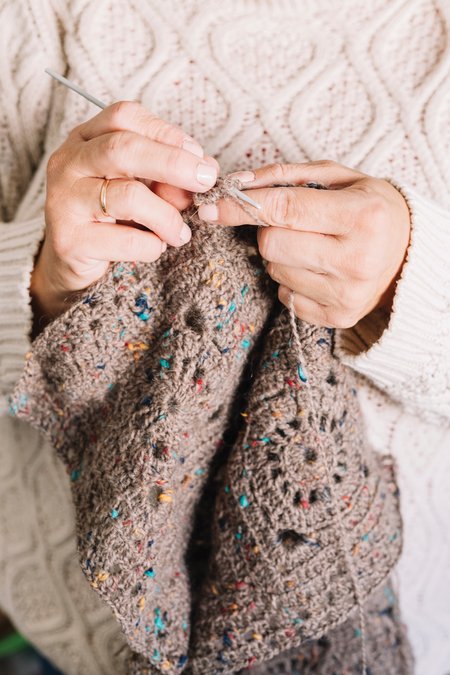
For a long time, “grandma hobbies” were a necessity. Quilting was what kept you warm at night. Baking and canning kept you fed. Refinishing furniture was to keep from wasting items that might have a little life left in them.
Then you had some things that were genuine hobbies — needlepoint, embroidery, tinkering in the garage, reading. But after the invention of the internet, we decided those pastimes were outdated. Too slow. Too quiet. (The irony is that we enjoy watching others doing the exact pastimes we could be doing ourselves.)
Now, in a shocking turn of events, they’re back.
I quilt. I cut fabric, sew blocks together, and experience a level of satisfaction that feels disproportionate to how small the pieces are. My husband loves the hobby — not the expense of it, but the results. On these recent cold nights, we’ve been staying warm under our king-sized quilt that I made. We both add a few extra quilts on top to hold in some heat, and I hope that anyone who has received a quilt as a gift from me has used it to keep themselves warm.
My sister embroiders and reads — and yes, sometimes that reading happens on an electronic device, but it’s still reading, still focused, still quiet in the way scrolling never is.
Needlepoint has made a full comeback, too — no longer just florals and dusty pillows, but modern patterns that suggest this is not your grandmother’s pastime. Except it is. She just didn’t need it to be trendy.
Baking is back in a big way. My sister-in-law bakes so many delicious cakes and cookies, and she doesn’t even eat them — she just enjoys the process. More people are baking sourdough, canning vegetables and reviving skills that used to live only in handwritten recipe cards and pantry shelves.
Also making a comeback are board games, pulling people away from screens and back around tables, where you have to talk to each other in real time.
Individually, these hobbies don’t have much in common — but together, they tell a story. They’re slow. They’re hands-on. They require attention, but not urgency. And they don’t demand that you constantly be online while doing them — which is ironic, because many of us learned them online.
I learned a lot about quilting from the internet. Tutorials, videos — the collective wisdom of people who figured it out before me and decided to share instead of gatekeep. I also taught myself how to do my own nails using Gel-X kits at home, thanks largely to TikTok. If you’ve ever watched someone calmly explain nail prep while you panic-hold a tiny brush, you understand the value of a good tutorial.
Technology is great for learning. It’s also great for entertainment. I listen to podcasts or music while I quilt or work on furniture. Podcasts, in particular, are incredible — you can learn, laugh or get lost in a story while your hands stay busy. Social media groups make it easy to ask questions, get advice and connect with people who share the same hobbies, even if none of them live down the street.
Speaking of down the street, the internet also gives us ways to access products we don’t have available locally. I love a specific fabric line by a designer named Riley Blake, but without the internet, I wouldn’t be able to get some of the fabrics that I love to use.
The internet isn’t the enemy.
The problem is constant scrolling, constant comparison, constant noise — it’s exhausting in ways we don’t always notice until we step away. There’s no natural stopping point; no sense of completion.
Last summer, my husband and I got a pool. Surprisingly, it helps me unplug. I can be outside, listening to music and floating, without feeling the pull to check my phone every few minutes. My husband has always loved being outside. I, however, do not enjoy being outside unless there is a purpose. The pool gave me one.
We both turned 40 this year, which apparently comes with wind chimes and bird feeders. We’re not quite into bird watching as a hobby yet, but we’re clearly circling the idea.
Grandma hobbies don’t rush you. They end when they’re done — the loaf cools, the quilt gets finished, the project gets set down. There’s a beginning, a middle and an end — and something tangible to show for your time. Then you get to start it again.
Turns out, grandma wasn’t behind the times. She just knew how to use her time wisely.a