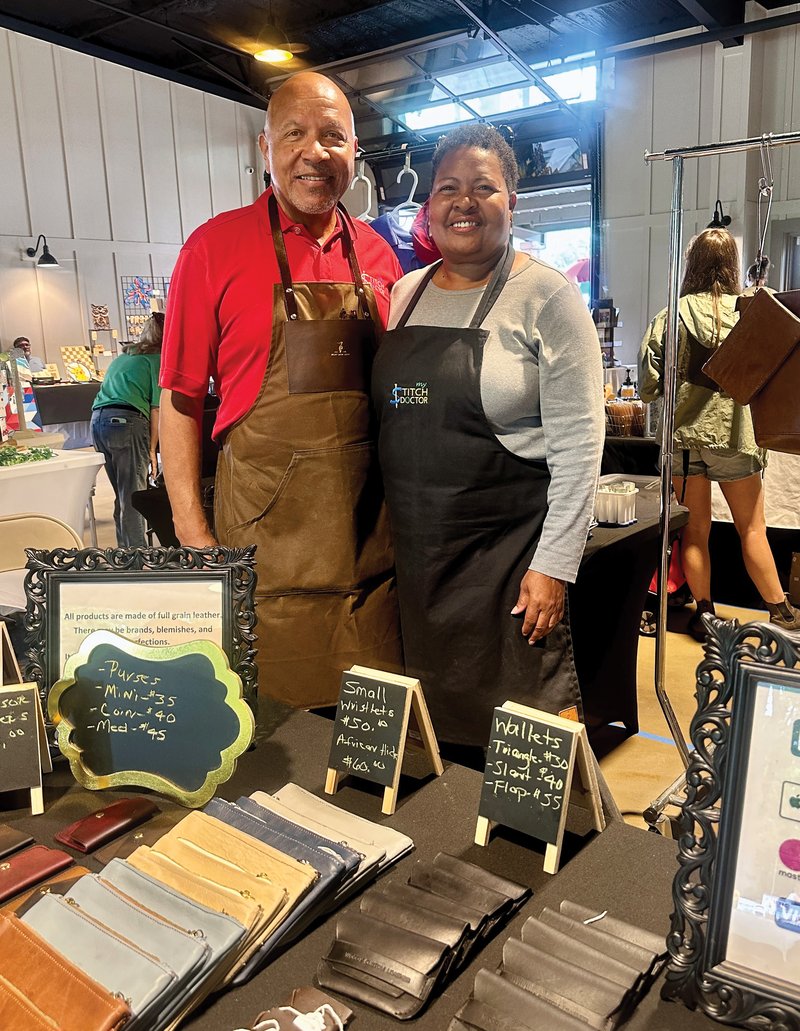
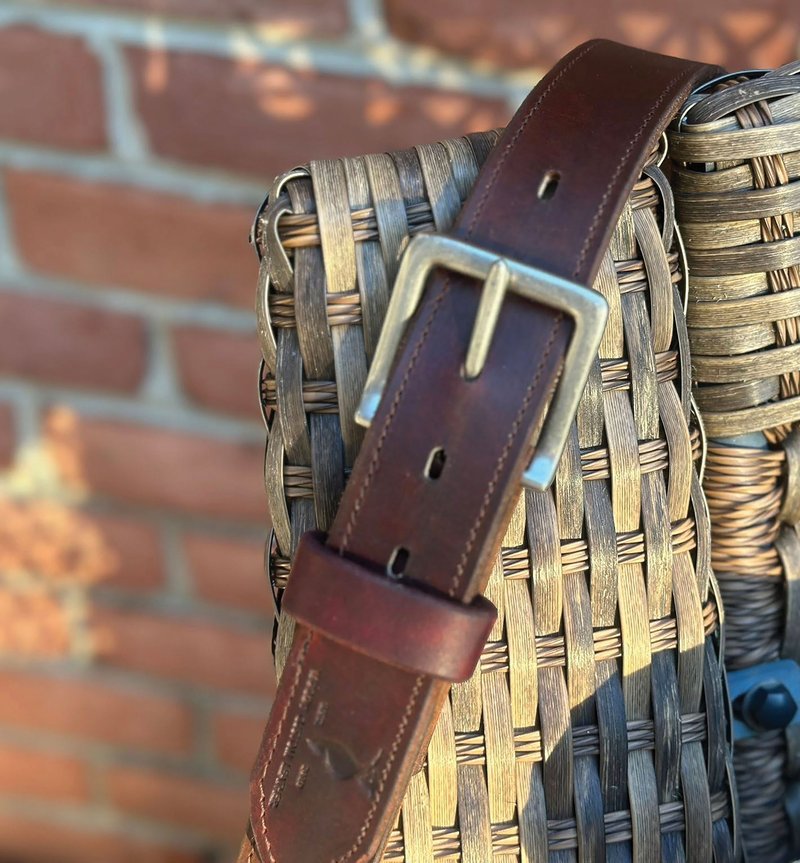
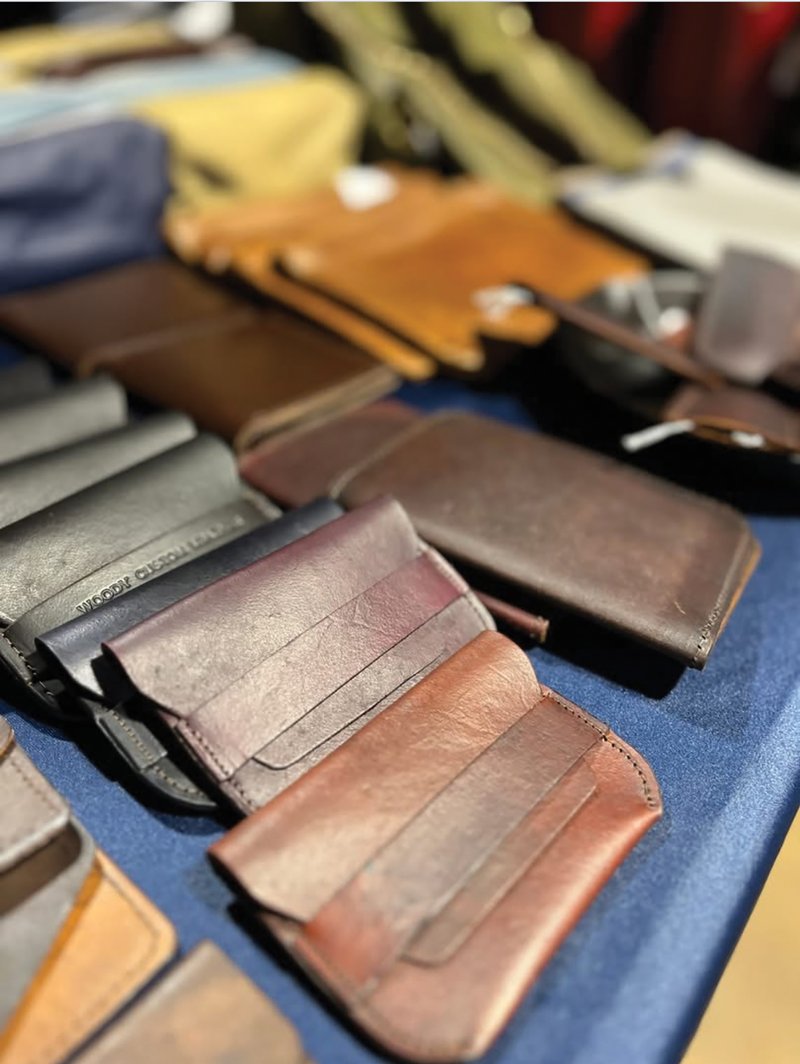
On a typical Saturday morning at the Statesboro Main Street Farmers Market, the smell of coffee drifts between booths as shoppers wander through a maze of vendors. Near the center, one table draws a second look — a display of leather bags, aprons and wallets, each piece neat, sturdy and unmistakably made by hand.
Behind the table is Curtis Woody, a man whose life has written many distinct chapters, all now bound into one impressive book.
Curtis’ journey began far from the farmers market. He grew up in Claxton, raised by a single mother in the housing projects, where he says the lessons were simple but lasting.
“Growing up in Claxton, I learned resilience and the value of doing things right the first time — not because anyone was watching, but because it spoke to who you were,” he said. “In our community, people worked hard, fixed what was broken, and made the most of what they had.”
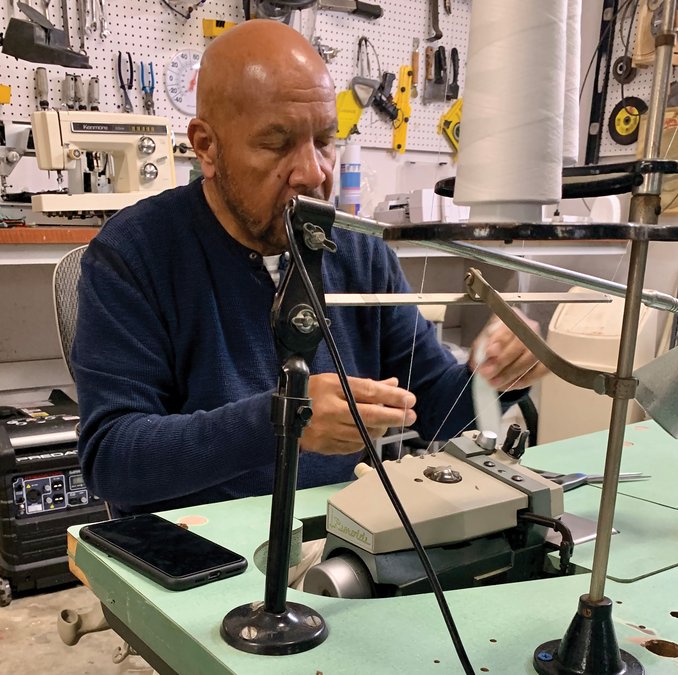
His introduction to sewing came early. Curtis spent countless hours in his grandmother’s sewing room, watching her work and learning by doing. But it wasn’t until adulthood — and a surprise find at Goodwill — that it all came rushing back.
After losing some weight, he found himself shopping for smaller clothes when he spotted an old sewing machine on a shelf. Instantly, he was transported back to a high school home economics class — one he and a friend had joined, hoping it would be a good place to meet girls.
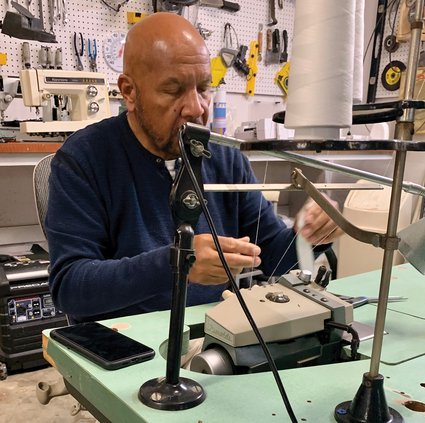
That day, nostalgia turned to curiosity — which would soon lead to fascination. He bought the sewing machine, took it home, and started sewing again. He was captivated by the mechanics of how the machine worked, and he continued to add to his collection, amassing more than 25 at one point.
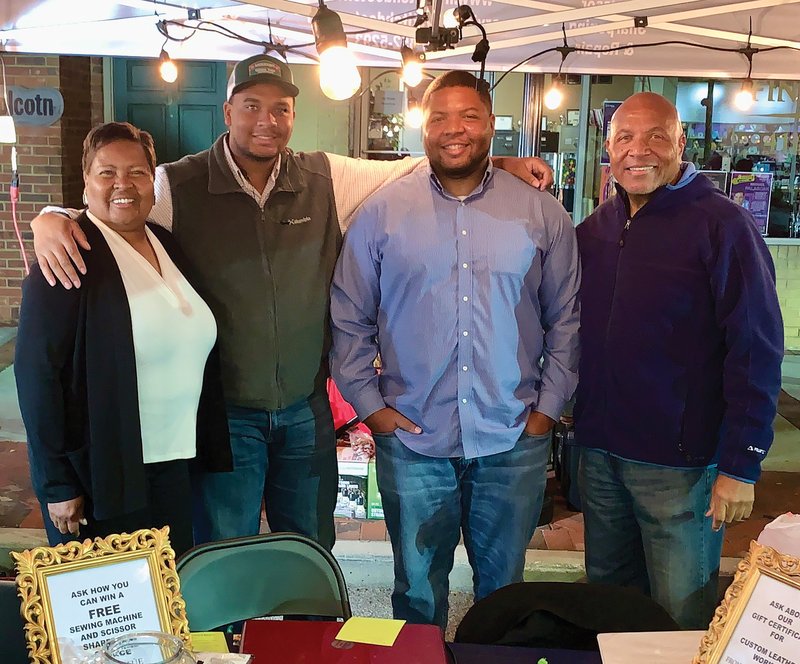
When his favorite one broke down, he taught himself how to fix it. Soon he was repairing machines for others — a hobby that turned into My Stitch Doctor, a small repair business. From there, he launched Woody Custom Leather where he began crafting leather goods and selling them locally, alongside his wife, Charlotte, and their sons, Jared and Jordan.
Yet leatherwork is only part of his story. Curtis’ life has moved through seasons, each tied together by a single thread — service — beginning with his time in the U.S. Army, where he worked with a tactical missile unit in Germany.
“My military service taught me that discipline isn’t just about following orders — it’s about commitment, precision and accountability,” he said. “Every detail mattered because someone’s well-being depended on it. That mindset shaped how I lead, teach and create today.
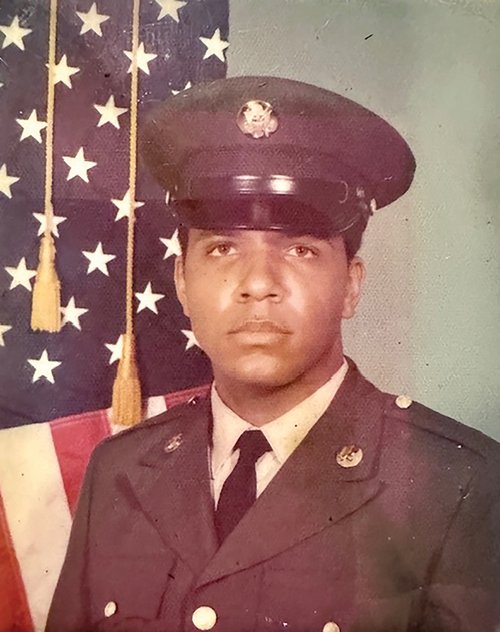
“There’s a clear parallel between military discipline and craftsmanship — both require patience, focus and a steady hand under pressure. You learn to take pride in small details, to finish what you start, and to hold yourself to a higher standard, even when no one’s watching.”
Curtis later became one of the first 500 African American students to attend Georgia Southern University, where he earned both his bachelor’s and master’s degrees. Also among those 500 was his wife.
“It was a time of both opportunity and challenge,” he said. “I knew that my presence carried meaning — that how I conducted myself could influence perceptions and help open doors for others who would come after me.
“There were certainly many challenges, but there was also a tremendous sense of pride and purpose among fellow African American students.”
One of his standout memories from those years was becoming a founding member of the Xi Tau chapter of Alpha Phi Alpha, Inc., the first ever intercollegiate fraternity for African American men.
“To be counted among brothers in the same lineage as Dr. Martin Luther King Jr., Andrew Young and countless other prominent African American leaders is an honor I continue to cherish to this day,” he said.
After spending years in the corporate world, Curtis returned to Georgia Southern as a professor of business and communication arts. He also served as director of the Center for Professional and Workforce Development, where he helped create programs to connect students with industries.
For him, it felt like a full-circle moment.
“Standing in the same classrooms where I once sat reminded me of the power of persistence and progress,” he said. “As an educator, I wanted my students to see that success isn’t only about achievement — it’s also about the responsibility to lift others along the way.”
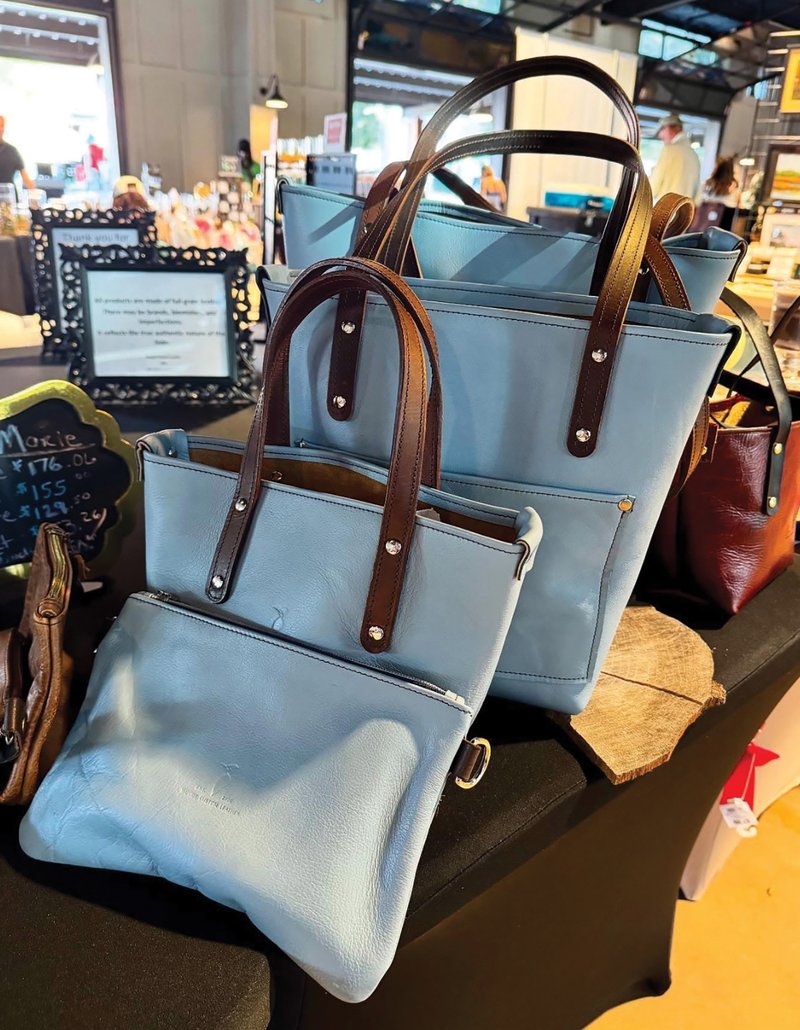
Through every season, Curtis has continued to create with his hands — and often, he uses those skills to help others.
“Craftsmanship, to me, has always been about service — about creating and restoring pieces that hold meaning beyond their material form,” he said. “Whenever I can, I take the time to repair items for friends, neighbors, and others who might not be able to replace something cherished.”
These skills became especially important during the pandemic, when his family purchased several industrial sewing machines and produced more than 100 full isolation gowns for the staff at East Georgia Regional Medical Center. More recently, Curtis donated nearly 30 of his classic Singer sewing machines — including heirloom and collector’s models — and industrial sergers to a local organization dedicated to helping young women develop both life and professional skills.
In addition, as a member of Georgia Southern’s FabLab in downtown Statesboro, he currently teaches a course on basic sewing and the fundamentals of leathercraft.
“There is something profoundly rewarding in passing down skills that nurture patience, discipline and pride in making something built to last,” he said.
For Curtis, each role and season of life — soldier, student, executive, educator, entrepreneur, craftsman — connects back to a deeper purpose.
“When I look back on all these chapters … what I hope my story communicates is that resilience, curiosity and integrity matter more than circumstance,” he said.
“I want the next generation to see that where you start doesn’t define where you can go, and that each challenge is an opportunity to learn, grow and give back.
“I hope they understand that success isn’t just measured in titles or accolades, but in the impact you have on others, the skills you cultivate, and the legacy you leave behind.”
That belief, stitched into every piece he creates, reflects the same purpose that’s guided Curtis’ entire life: to build, to teach, to lift others along the way.
“It all connects,” he said. “Every skill, every season. My goal is to use what I’ve been given to help others — and to leave people better than I found them.”