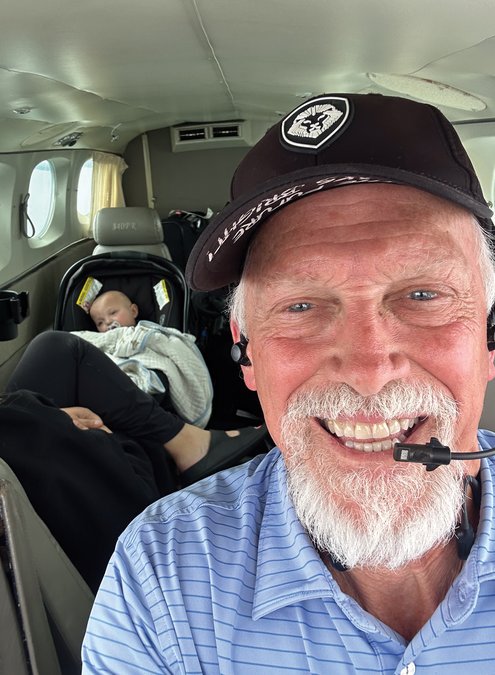

For Philip Roesel, flying has been a part of life for as long as he can remember. His love of aviation took root early — not in a classroom or flight simulator, but under the belly of a plane.
That early introduction to the sky was thanks to his father, who was involved in many airplane ownership partnerships from the time Philip was very young. His early training revolved around a single-engine 1966 Piper Comanche 260B, the plane his father bought when Philip was just 12 years old.
“I took care of it — washing it and cleaning oil off the belly, which wasn’t easy, given how close it was to the ground,” he said.
Within three years, at age 15, Philip had begun flight training in that same plane, with the ultimate goal of a successful solo landing — when a student pilot completes a short flight and lands an aircraft by themselves, without an instructor on board. It wasn’t long before Philip was navigating a cross-country family trip from Florida, flying around Cuba to Cozumel and then Guatemala City, where his brother and sister-in-law were serving in the Peace Corps.
Those early experiences above the clouds did more than just ignite Philip’s love of flying — they also shaped his perspective. Today, decades later, that same passion and sense of purpose fuel his work with Angel Flight, a nonprofit organization that coordinates free air travel for patients who need medical treatment far from home. Volunteer pilots like Philip donate their time, aircraft and fuel to make the trips possible.
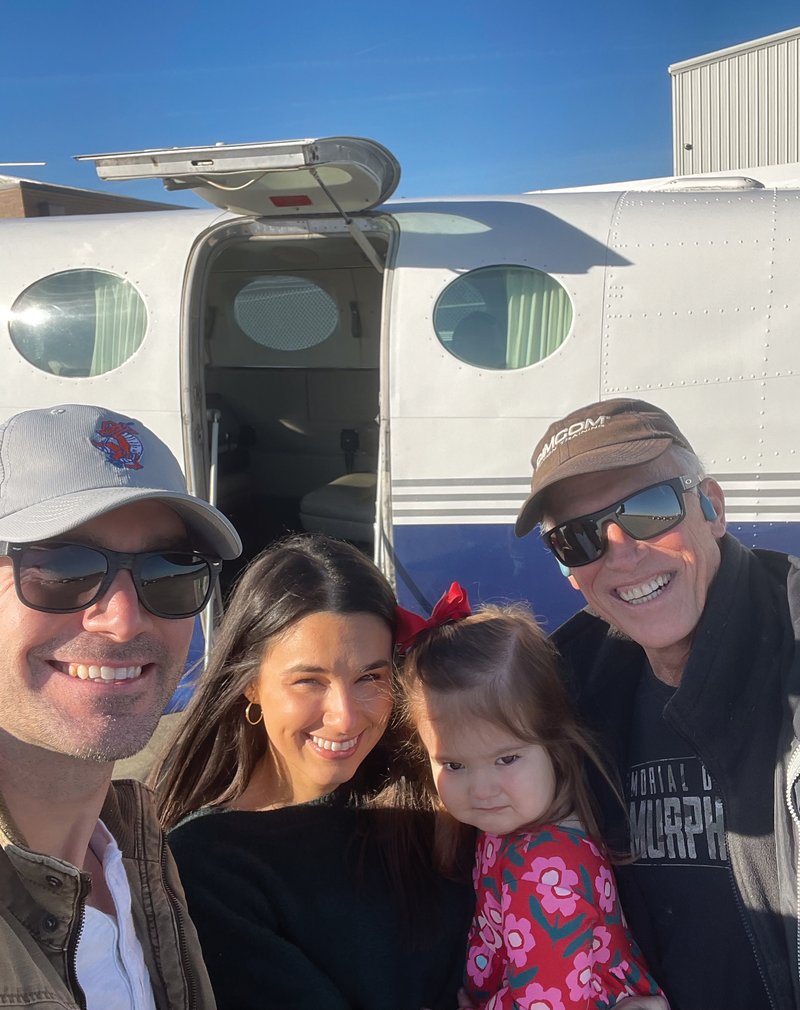
“Angel Flight has always appealed to me,” he said. “It’s the perfect combination of helping someone in need and doing what I love.”
Flights typically serve patients who are ambulatory and medically stable but unable to afford or endure long car rides or commercial travel. The group coordinates missions across multiple states, connecting pilots and passengers through a shared goal of bringing hope and healing.
“I aim for at least one mission a month, though I've gone several months without one — like before my recent flight with an infant to Omaha, Nebraska,” he said. “Weather turned bad, and the second and third relay pilots canceled. My aircraft is better equipped for tough conditions than most small, general aviation planes.”
Each mission requires careful coordination — routes, weather checks and timing to ensure passengers make their appointments safely and on time. And while the flights demand complete focus from Philip, he admits there’s an inevitable sense of responsibility that often can feel heavy before takeoff.
“As pilots, we can’t afford to get emotional in the air,” he said. “I save that for before the flight. I’ll call my wife, Karen, let it out, then focus on being the steady pilot these passengers need.”
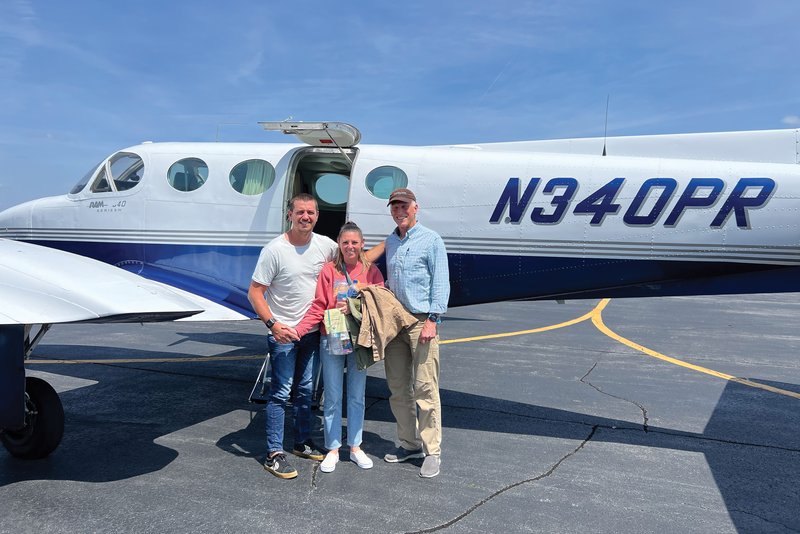
Philip says he’s had several especially memorable experiences over the years, though one passenger, in particular, made a lasting impact: Matthew Hite.
“He’d been battling glioblastoma for years when I flew him on multiple missions,” he said. “No one described his challenges — or his hope — better than Matt. He was full of God’s love and spread only positivity.”
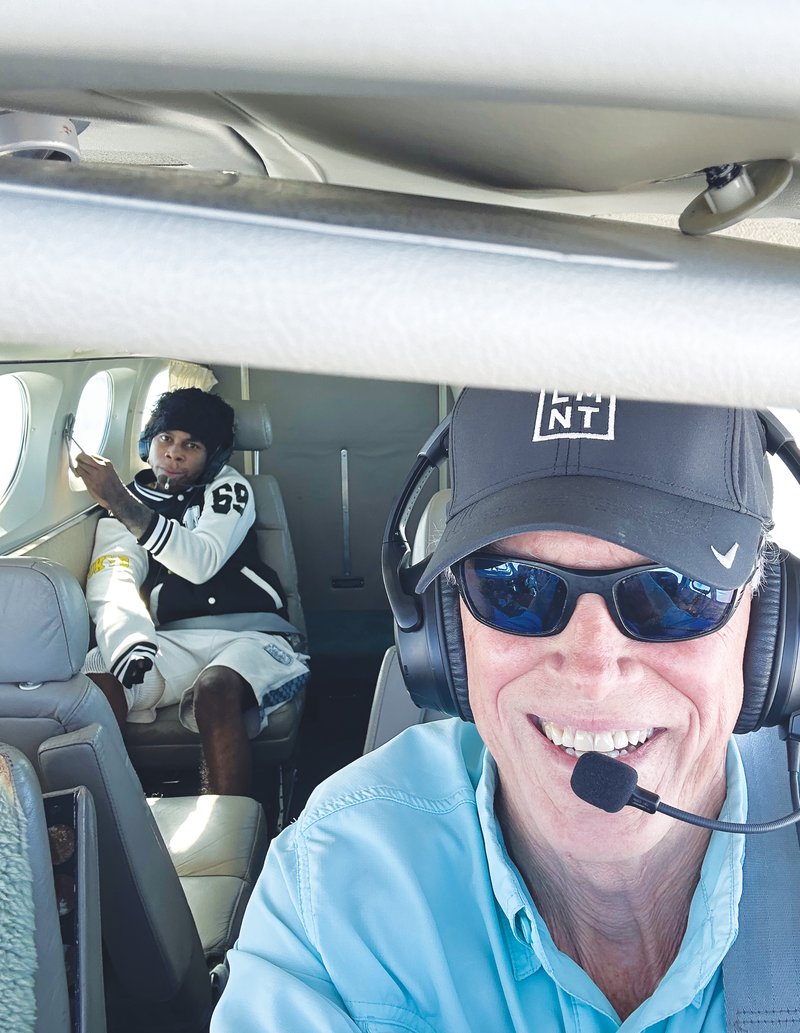
Most missions leave a mark, but many also require pilots to think on their feet in surprising ways — like last year, when Philip flew a Haitian immigrant, who spoke no English, to the burn center in Augusta.
“He was alone, and I worried the trip was a disaster,” he said. “When we landed at Daniel Field, there was no ground transportation waiting. I borrowed a courtesy car, drove him to the center, and helped with check-in paperwork. I left only after they took him back for treatment.”
It’s moments like these that remind Philip why he volunteers.
“The most rewarding part is connecting with someone new and getting them safely where they need to go,” he said. “The challenges? Logistics like this — unexpected hurdles that test your resourcefulness.”
Outside of his work with Angel Flight, Philip has built a successful career rooted in hands-on skill and technical expertise — precisely the types of things at which he excels as a pilot. He and his brother Paul operated the family-owned H.A. Sack Company for years before selling it. He holds an MIS degree in computers and multiple professional licenses, including master electrician, master mechanical contractor, journeyman plumber, HVAC mechanic, building controls technician and building controls programmer.
Through it all, he remains guided by the same principles that drew him to flying as a young boy — a steady hand, an adventurous spirit, and a desire to use his skills for good.
“When you love what you’re doing, it’s hard to say it is true service,” he said. “Flying lets me give something meaningful. Sometimes, that means getting someone to the treatment they need. Other times, it’s just being there — helping them take a breath and feel cared for in the middle of what they’re facing.”