Anniversaries offer a chance to reflect on the places and traditions that become part of everyday life. In communities like Bulloch County, those milestones often belong to local businesses, institutions and gathering places that grow alongside the people they serve. This year marks several notable anniversaries — including the nation’s 250th birthday and more than two centuries of history in Bulloch County itself. Together, these milestones remind us that the stories of our community and our country are built over time, shaped by the people and places that continue to endure.
America at 250
A nation — and a community — shaped over time
Anniversaries tend to put time into perspective, a reminder that the places we gather, the traditions we enjoy and the institutions on which we depend did not appear overnight. They were built slowly, shaped by generations who invested themselves into something meant to endure.
In 2026, the United States marks a historic milestone — the 250th anniversary of its founding. Known as the Semiquincentennial, the occasion commemorates a quarter of a millennium since the signing of the Declaration of Independence on July 4, 1776.
When delegates gathered in Philadelphia that summer, the young nation they envisioned was far from certain. The Declaration of Independence announced the colonies’ break from Great Britain and laid out a bold statement of principles — that all people are created equal and possess certain unalienable rights, including life, liberty and the pursuit of happiness.
Those words became the foundation of a new republic. In the centuries that followed, the United States expanded across a continent, endured civil war, navigated economic upheaval and emerged as one of the world’s most influential nations.
The story of the country has never been simple or straightforward. Progress has often come through challenge and debate, yet the nation has continued to evolve while holding onto the ideals expressed in its founding documents.
Today, more than 330 million people call the U.S. home. The country includes 50 states, stretches across multiple time zones and encompasses an extraordinary range of cultures, landscapes and traditions. From small rural towns to major cities, communities across the nation contribute to the broader American story.
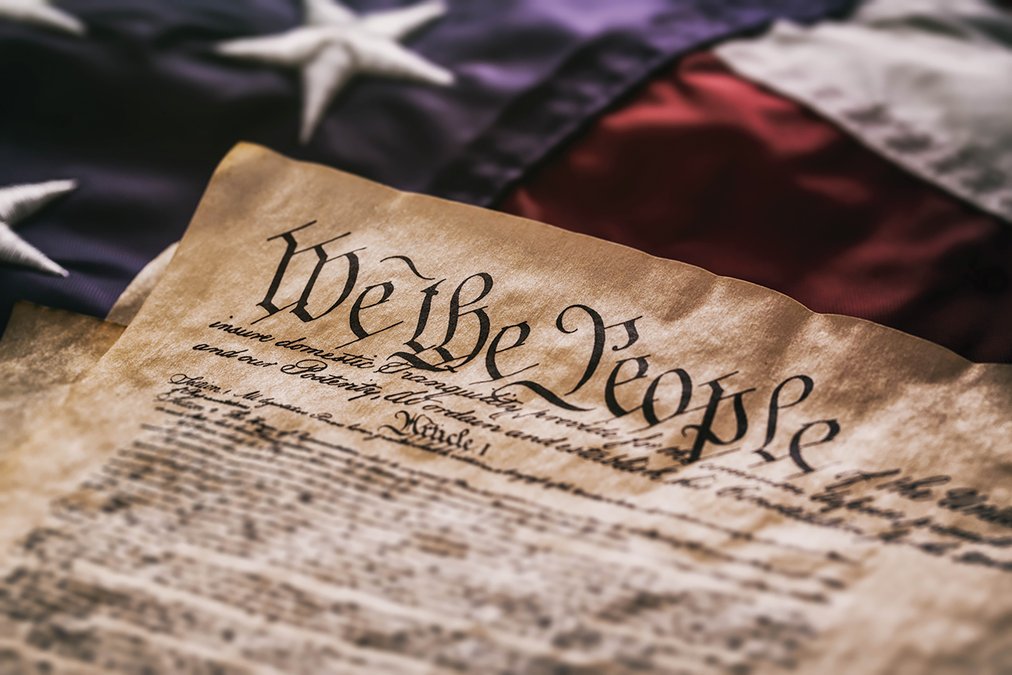
- 1787 — Delegates return to Philadelphia to draft the U.S. Constitution, establishing the framework of government that remains in place today. The Bill of Rights soon followed, guaranteeing fundamental freedoms such as speech, religion and the press.
- 1803 — The Louisiana Purchase doubles the size of the nation, extending its sovereignty across the Mississippi River. Part or all of 15 states were eventually created from the land deal with France.
- 1861 — The Civil War, fought from 1861 to 1865, tested the nation’s commitment to unity and freedom. Its outcome preserved the United States and led to the abolition of slavery, a turning point that would reshape the country’s future.
- 1869 — The completion of the transcontinental railroad connects the two American coasts for the first time, opening the American West to rapid development and trade.
- 1872 — Signed into law by President Ulysses S. Grant, Yellowstone becomes the first U.S. national park, protecting and preserving 2.2 million acres across the Montana and Wyoming territories.
- 1915 — The sinking of an unarmed British ocean liner, the Lusitania, by a German submarine, killing, among others, 128 Americans, prompts the U.S. to join World War I on the side of the Allies. Leaving behind its isolationism, the U.S. goes on to become a global superpower.
- 1920 — The 19th Amendment is ratified, granting women the right to vote.
- 1929 — The American stock market crashes, bringing an end to the “Roaring Twenties” and setting the stage for years of economic deprivation and calamity during the Great Depression.
- 1941 — The U.S. enters World War II on the side of the Allies following the Japanese attack on Pearl Harbor.
- 1968 — The 1960s were a time of major social and political change. The civil rights movement, protests against the Vietnam War, and the rise of youth counterculture challenged long-standing institutions and traditions, while others pushed back against those changes. The assassination of civil rights leader Martin Luther King Jr. on April 4, 1968, showed how deeply divided the country had become.
- 1969 — American astronauts land on the moon, a moment watched by millions around the world and remembered as one of the most significant achievements in the nation’s history.
- 2001 — September 11 shakes the nation when Islamist terrorists crash hijacked planes into the World Trade Center in New York City, the Pentagon in Washington, D.C., and the Pennsylvania countryside, resulting in the deaths of nearly 3,000 people.
- 2020 — The COVID-19 pandemic sweeps the globe, ushering in more than two years of lockdowns, social distancing and mask wearing. By May 2022, the virus had claimed more than one million American lives.
- 2026 — The United States celebrates the 250th anniversary of the signing of the Declaration of Independence.
A country built on tradition
Alongside countless historic events, everyday traditions also help shape American culture. These shared experiences — large and small — help define what it means to live in the U.S.
- Fourth of July celebrations — Independence Day is marked across the country with parades, fireworks, concerts and community festivals honoring the nation’s founding.
- Backyard barbecues — Grilling burgers, hot dogs, steaks and ribs while gathering with friends and family has long been a summertime staple.
- County and state fairs — Agricultural fairs featuring livestock shows, carnival rides and local food remain a cherished tradition in many communities.
- Friday night football — Across the country, high school football games bring entire communities together in the fall.
- Thanksgiving dinner — Each November, families and friends gather to share a meal centered around turkey and traditional side dishes.
- Road trips — Traveling America’s highways to visit national parks, historic sites and roadside attractions has become a classic way to explore the country.
- Baseball games — Often called “America’s pastime,” baseball has been a part of the nation’s sports culture for generations.
- Voting — Participating in local, state and national elections remains a cornerstone of American democracy.
Rich in local history
Bulloch County marks 230 years of growth
Here in Bulloch County, there is another anniversary worth noting. The county was established in 1796, making it 230 years old this year.
What began as a largely rural agricultural community has grown into a thriving regional hub anchored by education, commerce and strong local traditions. From the early days of settlement through the founding of Statesboro and the establishment of Georgia Southern University, the county’s story has unfolded alongside the broader history of the nation.
- 1796 — Bulloch County is established by the Georgia Legislature and named for Archibald Bulloch, Georgia’s first provisional governor. The state’s 21st county, it was at the time one of its largest.
- 1803 — The town of Statesboro (“Statesborough”) is incorporated from a gift of 200 acres of land given several years earlier by George Siebald of Augusta. It is designated the county seat.
- 1819 — The town of Portal becomes incorporated.
- 1864 — During the Civil War, troops led by Gen. William T. Sherman pass through Statesboro on their March to the Sea, destroying only the courthouse.
- 1874 — Nine years after the end of the Civil War, a group of former slaves establish the Willow Hill School to serve the area’s Black children.
- 1889 — Statesboro’s first railroad is completed, connecting Bulloch County to regional markets and encouraging economic growth.
- 1903 — Sea island cotton becomes the dominant cash crop, with Bulloch County leading the world in production. Timber and turpentine also play a crucial role in laying the foundation of the local economy.
- 1906 — The town of Brooklet is incorporated.
- 1908 — The First District Agricultural & Mechanical School opens in Statesboro. Over the years, it would undergo multiple name changes — Georgia Normal School (1924), South Georgia Teachers College (1929), Georgia Teachers College (1939) and Georgia Southern College (1959) — before ultimately obtaining university status in 1990, becoming Georgia Southern University. Today, Georgia Southern’s enrollment tops 27,500 students. Across multiple campuses, it offers 138 programs of study at the bachelor’s, master’s and doctoral levels.
- 1928 — The tobacco industry opens in Statesboro, replacing cotton as the primary cash crop following the boll weevil crisis of the 1920s and ‘30s. Within 10 years, annual sales climb to an excess of $1 million.
- 1936 — The Statesboro Airport is constructed, improving transportation and regional access.
- 1970 — The town of Register is incorporated.
- 2017 — Statesboro is named one of America’s Best Communities, winning $1 million for a significant revitalization project along the “Blue Mile,” bringing new life to South Main Street.
5 local places that have stood the test of time
Across Bulloch County, a number of landmarks have witnessed generations of change. Still standing today, these places are a reflection of local history and of the people who helped shape it.
- Bulloch County Courthouse — Completed in 1894, the courthouse has long stood at the center of Statesboro. Its distinctive clock tower and red-brick architecture make it one of the county’s most recognizable historic buildings.
- Georgia Southern University — Founded in 1906 as the First District A&M School, Georgia Southern has grown to become one of the most influential institutions in southeast Georgia.
- Downtown Statesboro — The historic downtown district has been a hub of local commerce since the city’s founding. Many of its buildings date to the late 1800s and early 1900s and now house restaurants, shops and cultural venues.
- First Baptist Church Statesboro — Founded in 1882 on North Main Street, the church has served generations of families and remains one of the community’s longstanding faith institutions.
- The Averitt Center for the Arts — Founded in 1882 on North Main Street, the church has served generations of families and remains one of the community’s longstanding faith institutions.