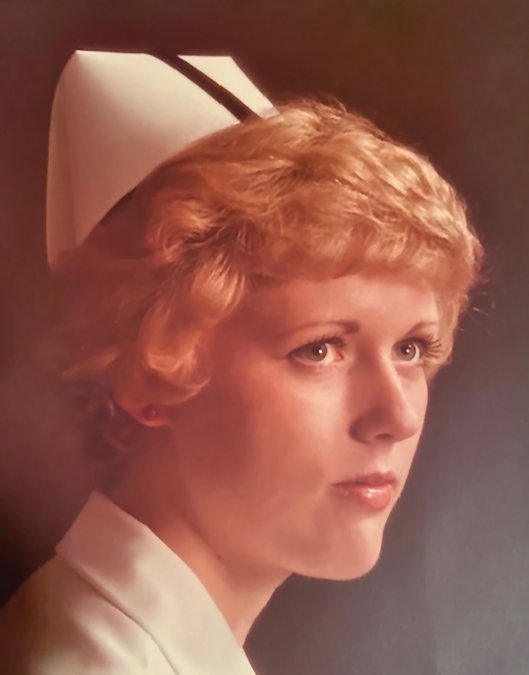
Nursing is written into Jean Bailey’s DNA.
“I tell people that being a nurse was genetic for me,” she said. “I remember playing nurse as a child when other kids were playing teacher.”
Both of her parents were nurses. Her father worked in anesthesia, and her mother took on multiple roles at a time — a necessity in the 1950s, when nurses were expected to know how to do just about everything. The story of where her parents fell in love only reinforces the point.
“My parents met in an insane asylum,” Jean said, only slightly joking. “Mom was working as a registered nurse, and dad was a Mennonite working as an orderly to cover his conscientious objector obligations.”
Conscientious objectors refuse to serve in military combat roles due to their deeply held religious beliefs in nonviolence. Instead, they fulfill their obligations to serve the country through alternative civilian service, historically in programs like the Civilian Public Service and in hospitals and camps during World War II.
“It just makes a better story to say they met in an asylum,” Jean said.
Her parents went on to serve as medical missionaries, and Jean spent much of her childhood in Rwanda, where she was homeschooled for elementary school before attending boarding school in Kenya for middle school.
“I watched Dad drip ether to sedate my brother to fix a broken arm,” she said. “He put our dog to sleep so that the surgeon could neuter him. Old-school nurses knew how to multitask.”
That unconventional beginning set the tone for a life spent in medicine, service and the kind of adaptability that can’t be taught in a classroom. Jean graduated from Hesston College in Hesston, Kansas, with her associate’s degree in nursing in 1980. By then, health care was already second nature, and she had learned that nursing was never abstract; it was practical, necessary and sometimes messy.
Her first professional job was an internship in intensive care — short-lived, but memorable.
“We were so excited about the $8-an-hour pay scale,” she said. “My associate’s degree paid my bills for about 15 years.”
In that time, Jean worked across nearly every corner of nursing — dialysis, emergency room, pediatric ICU, telemetry, home health, same-day surgery, recovery room and more.
Eventually, she returned to school at Georgia Southern University for her bachelor’s degree in nursing, with plans to continue on into the nurse practitioner program at GS. But life intervened, and when she and her husband, Jack, were blessed with an infant daughter, those plans were put on hold. She completed her BSN in 1995, but it would be another 15 years before she returned for her master’s degree.
“I tell people my doctorate in nursing will be post mortem,” she joked.
After 30 years of work as a registered nurse, Jean’s goal of becoming a nurse practitioner was ultimately fulfilled in 2012 when she completed the NP program at South University, followed by a certification in family practice in 2015. Her clinical training, she said, made all the difference, and she credits fellow local nurse practitioners Lee Walker, Karen Anderson and Patty Law for taking her under their wings and sharing their years of combined experience.
“I was blessed and fortunate enough to train with the best,” she said. “I would have never gotten through school or been able to pass my NP boards without their help.”
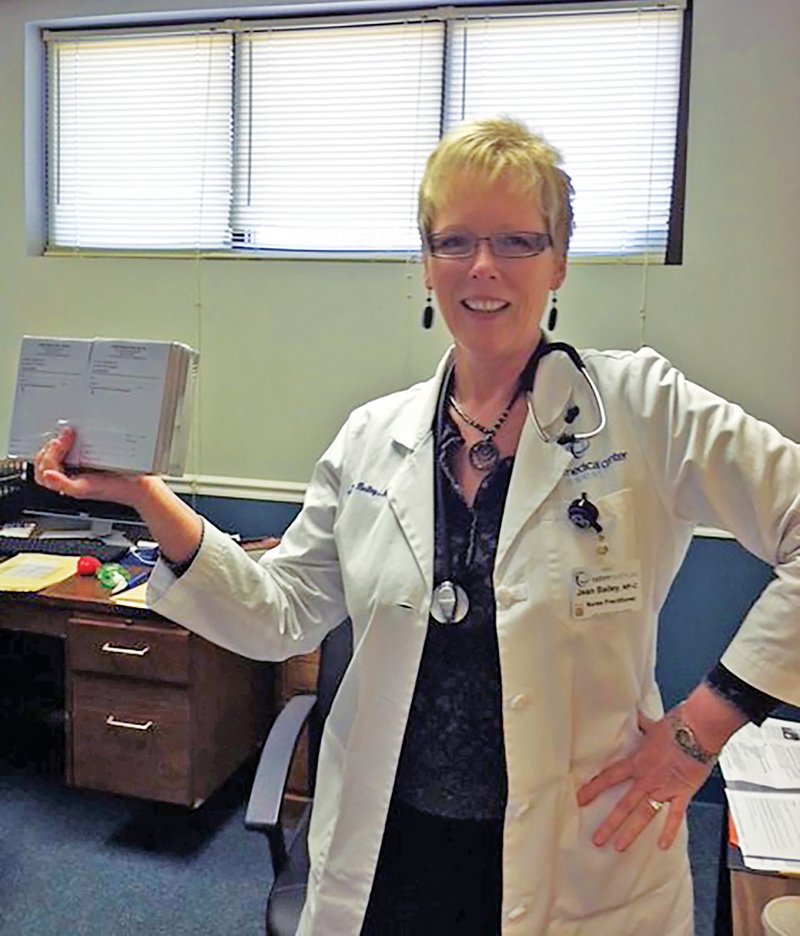
Her career as a nurse practitioner took her first to Millen, where she worked with Dr. Prakul Chandra. From there, she moved to Metter, working under Dr. Gary Branch and Dr. Dorsey Smith, and then to Statesboro Pediatrics and Family Healthcare.
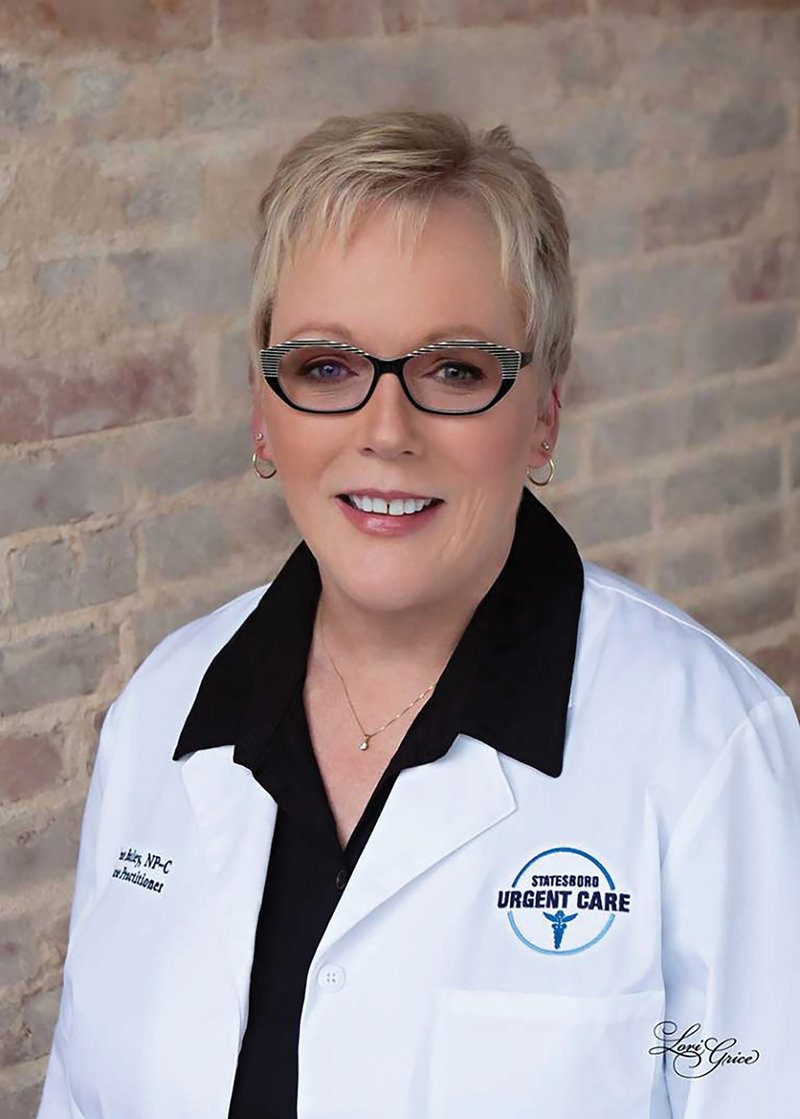
She also worked for several years in urgent care — a setting she describes as anything but boring — alongside Dr. Sreevalli Dega. When Dr. Dega and her husband, Dr. Ian C. Munger, opened their own practice, Statesboro Urgent Care, in November 2020, Jean joined their team full time, where she remained until her retirement in July 2024 — albeit a “soft” retirement.
“I still had a house payment and an Amazon account, and Social Security was not going to be enough,” she said.
By August, she was once again seeing patients, though with a much lighter schedule.
After more than four decades in nursing, Jean’s pride in the profession is unmistakable, even as she speaks candidly about its limitations — particularly in Georgia. Under current regulations, nurse practitioners must work under a supervisory physician, a system she believes underutilizes their training and limits access to care.
“We fill a large void, especially in rural, underserved areas,” she said. “We could do so much more if allowed to practice independently.”
She noted that many orders, including those for x-rays, labs, prescriptions and medical equipment, still require a supervising physician’s name, even when NPs are fully capable of managing the care.
“There are a lot of wonderful, bright, caring NPs in Statesboro and surrounding areas that give excellent, lifesaving, quality-preserving care to thousands of patients,” she said.
“A nurse that advances to be an NP brings learned skills like patient assessment to the table. You develop a sixth sense about sick patients, using all your senses — except for taste, hopefully,” she joked.
Looking back at her early nursing photos, cap and all, Jean can’t help but marvel at how much has changed.
“My facial expression seems to glow with innocence and naivety,” she said, recalling those early days with characteristic humor. “When I was in nursing school, I had never seen a urinal. I put my first bedpan under a patient backwards and put a rectal suppository in the wrong hole.
“I had yet to participate in a human’s birth or death,” she continued. “I had yet to express a juicy cyst — one of my favorite things to do! — suture a laceration, do CPR on a child, (or) tell a patient that they or their child had cancer.”
In the years since then, technology has drastically transformed medicine — for better and worse.
“Thirty years ago, with paper charting, hanging X-rays on a view box, diagnosing flu and strep throat without having to swab first were really the good old days,” she said.
What she misses most is the attention providers once gave to patients instead of screens. At the same time, she recognizes what a powerful tool those screens can be.
“Computer charting is the bane of every practitioner’s existence, but it is wonderful to have a wealth of information available in an instant on your phone,” she said.
Through it all, Jean believes the foundation of good care hasn’t changed — and for her, it is far more than a profession.
“I have always been a nurse,” she said. “It is a wonderful job, but it is a calling. Not everyone can do it, but those who answer the call are invaluable.”